iofy digital audiobook platform acquired by Ingram Digital

“Ingram Digital, an Ingram Content company focused on solutions for digital content management, hosting, distribution and promotion, today announced it has acquired the iofy digital audiobook platform from Audiofy Corporation.”

It’s official. As described in the press release, the iofy digital audiobook platform is now part of Ingram Digital. I’m happy about this move. This is the iofy development team I lead and I’m confident our acquisition will bring incredible value and additional ingenuity. We’ll now be building something amazing, which iofy wouldn’t have had the resources for on its own.

Other than some title changes, the team and focus are unchanged. Cartwright Reed, iofy’s President, is now in the role of Vice President of Product Development at Ingram Digital. My team is continuing the charge to build the best audiobook platform available (look for continued web service goodness).

The culture at both companies is driven by growth, creativity, and building solutions. I’ve had only positive experiences working with the folks at Ingram. They’re great people, and we’re looking forward to being part of an Ingram company.

Why I’m not opposed to rising fuel prices – Philip Greenspun’s electric car post

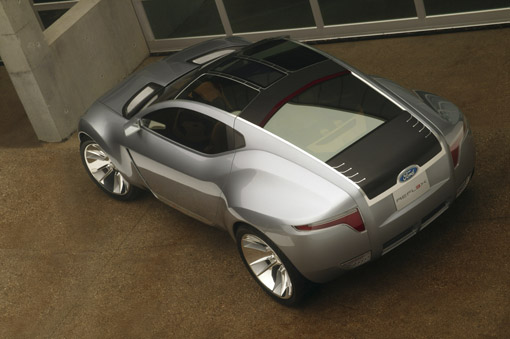
Pic of Ford Reflex concept car

Image of Ford Reflex, a concept hybrid vehicle with solar panels on the roof

.

Philip Greenspun, professor of electrical engineering at MIT (and an avid traveler and fellow aviator), has an outstanding post. He explains some simple math behind replacing every passenger vehicle in America for electric cars. The resulting cost: Zero.

Link to Professor Greenspun’s post

We’re already seeing a move towards smaller and more fuel-efficient vehicles. Solar panels are being installed on roofs. People are becoming aware of their energy consumption.

I often get in to discussions over why I’m not opposed to rising fuel prices. Philip’s post is a fabulous reason why. As fuel prices rise, people will feel the pinch – this is temporarily bad. But the result of that pinch will be drastically innovative solutions.

The problem with instantaneous time travel – relative versus absolute paths

I don’t usually get in to philosophical scientific stuff here, but this was just too fun to write about…
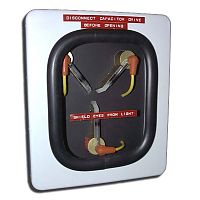
Flux Capacitor

image of flux capacitor intended as a joke – time dilation not included

There is a certain problem with time travel that a software engineer or sys admin will automatically understand. It has to do with relative versus absolute paths. As mentioned in the title, this applies to instantaneous time travel (time travel via time dilation does not experience this problem).

This realization came up while having an aviation discussion with AgentM regarding GPS. Somehow the idea of flying a small aircraft from today, 1,000 years in the future without GPS for navigation, came up. That led to time travel…

The problem is that the universe and everything in it is moving. A point along the equator moves, relative to the center of the earth, at 1,040 miles per hour. This means traveling 30 seconds backwards or forwards in time, to the same absolute path in space, would result in a spacial jump relative to the starting point of 8.67 miles (1,040 mph / 60 minutes in an hour / 60 seconds in a minute x 30 seconds).

All values for speeds acquired from RASC Calgary Centre. Their page on ‘how fast?’ is an awesome resource.

That’s only relative to the earth – The earth is moving through space relative to the Big Bang’s origin at 1,342,000 miles per hour. A jump in time of only a single second, with a constant absolute spacial path, puts you off course by 372.8 miles (probably miles above or below the earths surface in the process).

Let’s go back to calculus for a moment. Remember limits of functions at infinity? This is how one solves the spacial challenge of instantaneous time travel. For those who left their calculus books at home, this limit describes change as a function approaches an instant (usually as time or speed approach infinity or zero).

This becomes challenging to apply to instantaneous time travel because all physical movements known to man result in an instantaneous speed of zero. As proof, take the earths movement of 1,342,000 mph (a pretty high velocity) and divide it by infinity (what would happen at an instantaneous point in time). You get a speed of zero. Kind of like taking a picture at 1/5,000 of a second… Most everything stops. Except this is 1/infinity of a second.

This speed of zero is your relative path. A relative path of zero means your absolute path does not change, and therefore you remain in the same location while the rest of universe kept moving. A major problem.

To solve the spacial challenge of instantaneous time travel (and so you can land in the same place you jumped) one must have an instantaneous relative path that equals the function of one’s present location’s relative path to all universal factors.

Such universal factors include, but are not limited to, the earth’s rotation, the earths revolutions in the solar system, the solar systems rotation in the galaxy, and the galaxies movement in universe. Additionally, forces like black holes, comets, gravitational forces of satellites, and wind direction need to be considered.

This function becomes incredibly complicated, but let’s assume we will be capable of such calculations at or before we’re capable of making a human’s instantaneous velocity 1,342,000 mph. Manipulation of such a relative path would allow one to come out of instantaneous time travel in a completely different location, effectively teleporting.

Put simply, for successful time travel and/or teleportation, calculating the instantaneous velocity will be necessary.

Considering a Nokia N82 – iPhone battery life is cramping my style

iPhone vs  N82

Apple iPhone vs. Nokia N82, or complimentary citizens

.

That’s it! Twice in a week I’ve been left with a dead iPhone from snapping pics and pushing them live at an event or outing. Don’t get me wrong; I love the iPhone for most everything, but the lack of a swappable battery is adding some hate to the relationship (lack of video has also been a bone of contention).

The Nokia N82 is looking like a sweet option. Everything but a useable keyboard…

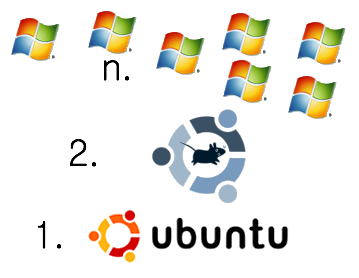
How to virtualize Windows on an Ubuntu host for an optimized dev / qa environment

 Ubu-Xu-dows

After converting my MacBook Pro in to a Windows developer dream, I wanted to have the same experience on a more portable, commodity hardware unit. Virtualizing Windows within Windows with VMware Server is something I’m familiar with. It’s something many Windows developers may prefer (and I recommend if you’re not comfy with linux as your host OS).

Quick background: Virtualizing a development/qa environment allows one to have an easily cleaned control environment. When a machine gets dirty (too many installs, tests, builds, or other garbage collects), you can simply delete the virtual instance and copy a fresh installation back over. This saves a ton of time. In dev, this allows a safe, clean, environment to test builds in. In a QA environment, this allows a very fast way to return to a known state.

My goal in a virtualized dev/qa environment is to run a host which consumes an absolute minimum amount of resources. I run virtualization software that allows more than one running VM at a time, such as VMware Workstation (PC), VMware Fusion (Mac), or VMware Server (PC or Linux). If you’re running Windows as your host OS, I recommend Windows 2000 Advanced Server because it is tunable to consume less resources than any other flavor of Windows (including Windows 2000 Professional).

Given that Linux runs on wrist-watch sized systems, it’s a safe assumption that one will get better performance from virtual machines than on a virtualized Windows environment. I chose Ubuntu since it’s super simple to install, is fairly reliable, offers similar features to Windows, and is still a smaller footprint my Win2kAS machines.

I started with version 8.04 desktop (hardy). The installation was a piece of cake, but there are no tuning options in the basic .iso. I installed VMware Server, but just while running the OS I could tell I would run in to performance issues later. The desktop flavor of Ubuntu isn’t light enough to pass all the processing power through to the VMs.

Instructions

Continue Reading